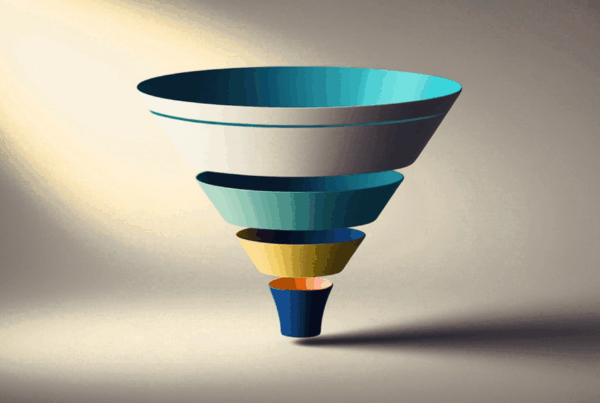
Conversion Rate Optimization Services are basically everything you do to get more of the right people to take the next step, without throwing more money at ads and hoping the universe rewards your bravery.
It’s the “make the bucket stop leaking” work.
More traffic doesn’t fix a broken funnel. It just makes the problem louder. Like inviting more guests to a restaurant when the kitchen is already on fire. Suddenly you’re “busy”… and still going broke.
So let’s talk about what real Conversion Rate Optimization Services actually include, what you should expect to get from a legit provider, and what’s mostly buzzwords and fluff that sounds good in a proposal but rarely moves revenue.
What Conversion Rate Optimization Services Really Are
CRO is the process of finding where people drop off, figuring out why, fixing it, and measuring whether it worked, then doing it again. It’s not a one-time “optimize the website” project. It’s a system.
If you’re running a B2B or service business, CRO isn’t just about “getting more leads.” It’s about getting more qualified leads and making it easier for the right people to say yes, so your close rate and revenue go up, not just your inbox count.
The CRO services you should expect (and what they should look like)
1) Conversion Audit (aka “what’s broken and why?”)
A real CRO engagement usually starts with an audit. This is where the guessing stops.
A good audit looks at your core pages and flows (landing pages, product/service pages, checkout or lead forms), your analytics, your mobile experience, your messaging, and the little trust/friction issues that quietly kill conversions.
The key output isn’t a deck full of opinions; it’s a prioritized roadmap. What to fix first, what can wait, and what’s likely to produce the biggest lift.
If you leave the audit feeling like, “Cool… but what do we do Monday morning?” then it wasn’t a great audit.
2) Tracking + Measurement Setup (because bad data = bad decisions)
Here’s the unsexy truth: CRO lives and dies by data quality.
If GA4 is half-configured, your events aren’t firing, or your funnel isn’t measurable, then you’re not optimizing, you’re gambling with spreadsheets.
A legit CRO provider should clean up tracking, align conversion goals, and ensure you can actually see where drop-offs happen (forms, checkout steps, key buttons, etc.). You don’t need 97 metrics. You need the right ones, consistently tracked.
3) Customer & Visitor Research (the “why” behind the numbers)
This is where the “aha” moments come from.
Heatmaps and recordings help, sure. But what really moves the needle is when you combine behavior data with direct feedback, polls, surveys, user testing, customer interviews, sales call reviews, and support tickets.
Because customers will tell you what’s wrong. Sometimes painfully. Often hilariously. Always useful.
If your CRO partner isn’t talking to customers (or at least mining customer language), they’re basically trying to win a boxing match blindfolded.
4) Landing Page Optimization (make the page do its job)
This is where people confuse CRO with design.
CRO landing page work isn’t “make it prettier.” It’s “make it clearer.”
That usually means tightening the headline and value prop, improving message match from ad to page, making the CTA easier to find and more compelling, and adding the trust/credibility pieces people need before they’ll take a step.
Also: mobile. So many “great” pages quietly die on mobile. If mobile experience isn’t part of the conversation, that’s a red flag.
5) Funnel Optimization (tiny leaks = real money lost)
Sometimes your landing page is fine… and your funnel is the problem.
This includes improving the steps after the click: lead forms, calendar booking flows, demo/trial signups, checkout/cart, and the follow-up sequence for people who abandon.
I’ve seen businesses obsess over button colors while leads sit untouched for two days. That’s not a CRO issue. That’s a “we don’t follow up like we want revenue” issue.
6) A/B Testing (prove it, don’t guess)
A/B testing is where CRO stops being an opinion contest and becomes a process.
Done well, it’s structured: you start with research, write a hypothesis, test one major variable at a time (usually), QA everything so you’re not measuring broken experiences, and then document the results so your wins compound over time.
What you don’t want is “random changes” disguised as testing. If there’s no hypothesis and no clear measurement plan, it’s not optimization, it’s just tinkering.
7) Conversion-Focused Copywriting (words that pull their weight)
Sometimes the biggest problem isn’t design or traffic.
It’s that your messaging is muddy.
Good CRO copy clarifies who it’s for, what problem it solves, what’s included, why it’s different, and what someone should do next. It also handles objections before the prospect has to go hunting for answers.
A small change in clarity can beat a big change in layout. I’ve watched it happen more times than I can count.
8) UX/UI Improvements (remove friction, don’t “redesign the world”)
CRO UX improvements are usually practical: fixing navigation confusion, improving readability, reducing steps, cleaning up visual hierarchy, and making the experience feel trustworthy.
This isn’t necessarily a full rebuild. Sometimes the right move is a few targeted fixes that remove the “ugh” moments.
9) Ongoing CRO Retainer (where results actually compound)
If your business is active, new offers, new campaigns, seasonal shifts, competitors changing, CRO is never really “done.”
The best results come from ongoing iteration: continuous research, tests, and improvements over months. That’s how you build a conversion flywheel instead of relying on one lucky spike.
What’s buzzwords, fluff, and stuff that rarely moves revenue
Let me save you some time (and a few painful invoices).
If you hear:
- “Proprietary framework” with no clear explanation
- Big conversion guarantees before they’ve seen your funnel
- “We improved engagement” without tying it to pipeline or revenue
- “Let’s redesign everything” as the default solution
…that’s usually smoke.
Real Conversion Rate Optimization Services are specific. They’re measurable. And they connect the dots between user behavior and business outcomes, more qualified leads, better close rates, higher revenue per visitor.
Deliverables you should expect (to avoid “consulting theater”)
At a minimum, you should walk away with:
- A prioritized CRO roadmap (not just “insights”)
- Clean tracking you can trust
- Research findings that point to specific actions
- A test plan with hypotheses
- Reporting that shows before/after movement
- Documentation of what worked and what didn’t
If there’s no paper trail of learning, you’re paying to relearn the same lessons every month.