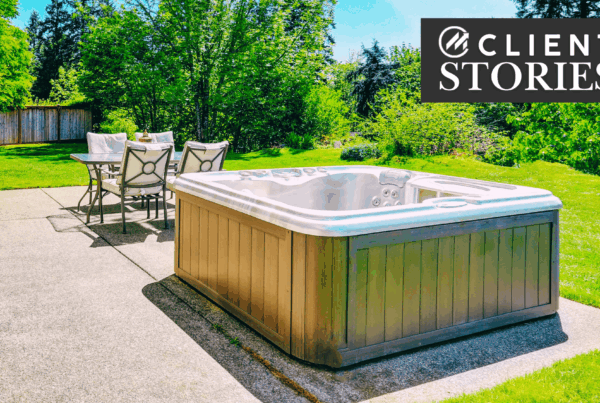
How Small Junk Haulers Can Win Without Outspending
I had a meeting recently with a prospect in the junk hauling space, and it was one of those conversations that hits a little too close to home if you’ve ever built something scrappy and local.
Junk hauling is one of those businesses that can be insanely profitable when the market is right. The barrier to entry is low, the model is simple, and if competition is light in your area, marketing can feel almost effortless.
But “almost effortless” only lasts until someone with deeper pockets decides your zip code looks tasty.
The Day the Market Changed
This company had a decent thing going. Then competition swept in, specifically a larger operator with more trucks, more crew capacity, and a significantly bigger PPC budget.
And that’s when the squeeze started.
The bigger company began pulling in the larger jobs. The kind of jobs that don’t just pay well, but make the whole operation run smoother because the schedule stays full.
“We’re Running Ads… So Why Are We Still Struggling?”
Here’s the part that matters: my prospect wasn’t asleep at the wheel.
They already had a PPC budget. They were running ads. They were doing what a lot of people would call “the play.” But they weren’t getting enough business to keep the company operating efficiently.
So they reached out to us with a question that usually shows up right when a business hits that scary middle ground, too legit to quit, too stressed to coast.
Is there a better option than just spending more?
Holistic Marketing: The Best Thing or the Worst Thing
A holistic, all-encompassing approach can go two ways.
It can become a junk drawer of marketing tactics. A little of this, a little of that, and somehow you’re doing “everything” while results stay stubbornly average.
Or it can become a real system. One that stabilizes lead flow, improves conversion, and gives you a fighting chance against a bigger competitor without needing their wallet.
If you’re going up against a larger company, you don’t win by copying their moves. You win by being more intentional.
Step One: Stop Fighting Over the Most Expensive Keywords
If the big player is bidding on broad, high-competition keywords, you’re going to feel it in your cost per lead.
So don’t play that game.
Go after long-form, specific keywords that match real intent. Things like hot tub removal, garage cleanouts, mattress disposal, eviction cleanouts, appliance pickup, same-day junk removal, paired with your city or service area.
These searches are often cheaper, and the customer is usually ready to book, not “thinking about it.”
The Win Here Isn’t Traffic. It’s Intent.
I’d rather have 20 clicks from people who need a garage cleaned out this weekend than 200 clicks from people casually browsing “junk removal” while they’re half-watching Netflix.
Specific beats broad when you’re the smaller fish.
Step Two: Build Landing Pages That Actually Convert
A lot of companies run ads to a homepage and wonder why the numbers don’t pencil out.
Homepages are for exploring. Landing pages are for booking.
If you’re advertising a service, build a landing page for that service. Make it clear what you do, show proof, answer the obvious questions, and make it ridiculously easy to call or request a quote.
No fluff. No maze. No “Contact us for more information” like you’re a law firm in 1997.
The Goal: Make Booking Feel Like the Easiest Decision
If someone is already stressed about a garage full of junk, your page shouldn’t add friction. It should feel like relief.
Step Three: Use “Unsexy” Marketing Your Competitor Ignores
This is where I sound like I’m romanticizing the glory days, but I’m telling you, old school mailers still work in local services.
Not because they’re magical. Because most big PPC-heavy companies don’t bother.
A simple, targeted postcard in the right neighborhoods around spring cleaning season can do damage (in a good way). Keep the message clear. Give people one easy action to take. Track it.
You don’t need to carpet bomb the city. You need to be smart and consistent.
Step Four: Use SEO to Build Long-Term Stability
PPC is a faucet. SEO is a well.
A faucet turns on fast, but it gets more expensive when everyone fights over water. A well takes time to dig, but once it’s producing, it changes the game.
If you want more organic leads, you need consistent effort on your Google Business Profile, real service pages on your website, steady review generation, and frequent job photos.
It’s not complicated. It’s just not instant.
The Quiet Advantage: Reviews + Photos + Consistency
A small operator with great reviews and real job photos can look more trustworthy than a giant brand with generic stock images and a call center vibe.
Step Five: Win on Speed (Because Speed Closes)
In junk hauling, the first responder often wins. Not always the cheapest. Not always the “best.” The fastest.
This is where AI can help without turning your business into a robot. Use it where it makes sense, respond faster to form fills, answer basic questions, and keep leads warm until a human can jump in.
Speed isn’t a gimmick. It’s a conversion tool.
Step Six: Automate Follow-Up So Leads Don’t Leak
If you pay for leads and don’t follow up, you’re basically lighting money on fire… but slowly, so it hurts worse.
Simple follow-up automation can text immediately, follow up later, and keep nudging until they book or say no.
Most people aren’t ignoring you. They’re busy. They got distracted. Another company replied faster. Automation fixes that.
Step Seven: Retarget Past Customers (The Easiest Money You’ll Ever Make)
This is the one I wish more service businesses took seriously.
Junk comes back.
Garages refill. People move. Leaves drop. Spring cleaning shows up like clockwork. Tenants leave furniture behind like it’s a tradition.
If you have a customer list and you never reach out, you’re leaving revenue on the table.
Send an email occasionally. Text once a quarter. Keep it simple. Ask if there’s anything piling up that they want gone.
You’re not “bugging” them. You’re reminding them you exist at the exact moment they might need you.
The Bottom Line: Build a System, Not a Single Channel
This is what I told them, and it’s what I’ll tell anyone getting squeezed by a bigger competitor.
If your whole business depends on PPC, you don’t have a strategy. You have a bill.
A real funnel stacks multiple advantages: higher-intent keywords, conversion-focused landing pages, fast response time, consistent follow-up, organic SEO, and customer reactivation.
You don’t need to be the biggest company in town.
You just need to be the one that’s easiest to book, quickest to respond, and consistent enough to stay top of mind.
That’s how you keep leads coming in and revenue growing, even when the big guys roll in with more trucks and more money.
And if you’re in that fight right now, I get it. It’s frustrating.
But it’s also a chance to tighten the system, sharpen the message, and build something that doesn’t crumble the moment the market gets crowded.
Keep it human. Keep it focused. Keep moving forward.
Struggling to figure out where your marketing dollars should actually go? Book a Free Strategy Session